As Russia’s invasion of Ukraine continues and many call for a strengthening of sanctions, an alternative to a full energy embargo has been discussed in the form of European Union tariffs on imports of Russian gas. We invited our European and US experts to express their views on this proposal, asking both panels whether they agree or disagree with the following statement, and, if so, how strongly and with what degree of confidence:
Keyword: European Union
a la carte pricing abortion access to credit accounting acquisitions active investing Adam Smith adaptation advanced economies advertising affordability Affordable Care Act Africa ageing agglomeration aggregates aging AI airline industry Alaska alternative investments amateurism Amazon American Recovery and Reinvestment Act American Rescue Plan anti-competitive behavior antitrust Argentina artificial intelligence arts asset allocation asset classes asset management asset pricing asset purchases asset returns asset valuation assets AT&T auctions austerity automatic enrollment automation automobile industry autonomous cars
bailouts balance sheet balanced budget bank accounts bank deposits bank failures bank finance Bank of England bank regulation bank runs banking banking crises banking rules banking sector banking union bankruptcy banks bans barriers to trade behavioral economics behavioral finance benefits betting Big Tech binary options Bitcoin board quotas bond yields bonds bonuses book market border adjustment tax borrowing borrowing and lending Brexit budget deficits budget scoring bundling Bureau of Economic Analysis Bureau of Labor Statistics bureaucracy business cycles business exodus business forecasting business opportunities business performance buy American buy European
cable and satellite TV California Canada cannabis cap-and-trade capital capital allocation capital asset pricing model capital budgeting capital flows capital formation capital income capital markets capital outflows capital regulation capital requirements capital stock capitalism CAPM carbon border adjustment mechanism carbon club carbon emissions carbon leakage carbon prices carbon pricing carbon tax carbon taxes careers CARES Act cars cash catastrophic risk CBDCs central bank independence central bank money central banks CFPB CFTC Chairman Warsh charitable deductions charity charter schools chief executives childrearing children China Christmas Clean Air Act cleantech climate change climate policies climate policy climate targets closing auction cloud computing clusters college admissions college athletes college tuition colonialism commercial banks commercial property commitments commodity markets communism compensation competition competition policy competitiveness concentration congestion congestion charges congestion pricing Congress Congressional Budget Office Connecticut consolidation constitutional amendment constitutions construction consumer harms consumer price index consumer prices consumer protection consumer welfare consumption consumption insurance continuous trading contraception control rights conventions coronabonds Coronavirus corporate boards corporate bonds corporate executives corporate finance corporate governance corporate investment corporate law corporate performance corporate reporting corporate reproting corporate social responsibility corporate tax corporate taxes cost disease cost of capital cost of living cost-benefit analysis costs of living Council of Economic Advisors COVID-19 creative destruction credibility revolution credit credit cards credit ratings credit risk creditors crime crypto assets cryptocurrencies cryptocurrency Cuba culture currencies currency currency manipulation currency reserves customers customs union
data data centres data protection debt debt brake debt ceiling debt obligations debt relief debt support debt sustainability debt-to-GDP ratio decarbonisation default default risk defaults defense defense economics defense spending defense suppliers deflation DEI democracy democratic legitimacy Department of Education Department of Homeland Security dependency ratio deposit insurance derivatives destination-based cash flow tax destintation-based cash flow tax Detroit devaluation developing countries developing economies development development assistance development economics digital currency digital economy digital euro digital infrastructure digital markets Digital Markets Act digital money digital platforms digital service providers digital services Digital Services Act digital tokens discount rates discrimination disease diseases disruption distribution distributional effects diversification diversity dollar dollarization dominant firms donations doom loops drought drug prices drug use duration dutch disease duties dynamic scoring
early years earnings earnings potential Eastern Europe economic agents economic data economic development economic geography economic growth economic history economic insecurity economic integration economic performance economic performance; electoral cycles; government policy; political economy; public policy; voters economic policy economic principles economic recovery economic reseach economic research economic statistics economic stimulus Economics 101 economists education educational quality efficiency efficient markets efficient markets hypothesis elections electoral cycles electric vehicles electricity embargoes emerging markets empirical economics employees employment employment contracts employment effects employment protection end-of-day trading energy energy policy energy prices energy sanctions energy subsidies energy supply energy taxes energy transition environment Environmental Protection Agency environmental regulation equal pay equities equity equity injections equity risk premium ESG ESMA essential goods ethanol EU EU budget EU Inc euro euro exit Europe European Central Bank European champions European Commission European preference European recovery fund European Research Council European Securities and Markets Authority European Union Europen Union Eurozone ex-ante regulation exchange rate adjustment exchange rates exchange-traded derivatives exchange-traded products executive compensation expectations experiments export controls export restrictions exports externalities extreme weather
Facebook faculty pay fairness family size Fannie Mae fast-track authority FDIC Federal Economic Statistics Advisory Council federal regulation federal regulations Federal Reserve fee caps fee transparency fees fiat currency fiduciary duty financial crises financial crisis financial manipulation financial market functioning financial markets financial performance financial policy financial regulation financial regulations bank runs financial risks financial services financial stability financial sustainability finished good prices firm capabilities firm finances firm location first past the post fiscal benefits fiscal cliff fiscal councils fiscal deficit fiscal deficits fiscal dominance fiscal policy fiscal rules fiscal stimulus fiscal sustainability floods food food prices food security forecasting foreign aid foreign direct investment foreign investment foreign students forward guidance fossil fuels fracking France Freddie Mac free float free markets free movement free trade full capacity fund performance fundamental value fungibility
G7 gambling game theory gasoline gatekeepers GDP GDP growth GDPR gender gaps gentrification geoeconomics geographical mobility geopolitics Germany gift-giving global banking global commerce global economy global financial crisis global minimum tax global minimum tax rate global supply chains global warming globalisation globalization gold Gold Standard golden share Google government government bonds government borrowing government budget government budgets government debt government MMFs government policy governments graduates Greece greedflation green cards green technologies green technology green transition greenhouse gases grocery stores growth Gulf of Mexico
hard drugs harmonisation Hawaii health insurance health outcomes healthcare costs healthcare quality healthcare reform hedge funds high net worth investors high-net-worth individuals high-skill workers high-skilled workers higher education hihg-debt countries hiring holidays home insurance home ownership household finances household welfare households housing agencies housing finance housing investment housing markets human capital humanitarian aid hurricanes
ideas identity illegal activities immigrant visas immigration import duties import restrictions imports impossibility theorem incentives inclusion income inequality income per capita income support income tax increasing returns to scale incumbents independent regulatory agencies index funds indexation indexing industrial polic industrial policy Industrial Revolution inequality inflation inflation expectations inflation target inflation-indexed bonds inflation-linked bonds information infrastructure innovation input prices inside information insider trading Instagram institutional investors institutions insurance insurance premiums Intel intellectual property interdependence interest rate caps interest rates interest-bearing assets intergenerational mobility intermediate goods intermediation international agreements International Energy Agency international monetary system internet internet: profits investment investment grade investment management investment policy investment portfolio investment returns investment strategies invisible hand IPOs Iran Ireland Italy
Japan job lock job mobility job satisfaction jobs Jones Act Jones Act; oil prices; gasoline; energy; energy policy; national security; energy supply; Hawaii; Puerto Rico; Alaska; Gulf of Mexico; war; Iran judiciaries junk fees
labor force participation labor income labor market labor market flexibility labor markets labor productivity labor regulations labor statistics labor supply labour force labour market Laffer curve laissez-faire land use land value tax landlords law and economics legacy preference legal liability legalisation legislative proposals lender of last resort leverage liabilities liberal democracy licensing life expectancy life outcomes liquefied natural gas liquidations liquidity listings listings securities exchanges living standard living standards llong-term borrowing loan relief loans lobbying local government lockdowns London long-short long-term borrowing lotteries low-carbon technologies low-income low-income households low-income workers low-skill workers LTCM Luxembourg
macroeconomic stability macroprudential policy Maine majority rule Mamdani management practices mandated disclosures manufactured homes manufacturing marginal tax rates marijuana mark to market market anomalies market cap market concentration market dominance market efficiency market indices market intervention market microstructure market power market quality market structure market value market volatility maturity transformation maximum sustainable employment median income Medicaid medical care medical debt medical research Medicare medium of exchange mega-banks mental health merger rules mergers mergers & acquisitions mergers and acquisitions metrics Mexico microfoundations Microsoft migration military capabilities minimum retirement age minimum wage minimum wage|labor market|low-skill workers|unemployment|productivity||||| mismeasurement mitigation mobile homes mobility Modern Monetary Theory monetary policy monetary system money creation money market funds monopsony power moral hazard mortality mortgage-backed securities mortgages museums music events mutual funds
NAFTA Nasdaq Nash equilibrium National Academy of Sciences national debt National Science Foundation national security natural disasters natural gas natural resources net neutrality net zero Netherlands network externalities new entry New York Nippon Steel Nobel Prize Nobel Prize in Economic Sciences Nobel Prize in Economics non-bank financial intermediaries non-compete clauses non-tariff barriers Northern Ireland Norway nudge policies Nvidia
OASI trust fund obesity occupational choice occupational licensing offshore accounts offshoring oil oil prices Omicron online sales online sales tax open economies open source optional practical training order execution output gap outsourcing overheating
panics Paris agreement passive investing patent trolls patents payday lending payment services payments system payroll taxes peace peer review Pell grants penalties pension funds pensions permanent residency perpetual futures perps personal data personal debt personal finance petrol pharmaceutical industry physical infrastructure physical risks pied-à-terre tax platforms policy advice policy entrepreneurs political appointments political economy pollution populism portfolio allocation portfolio diversification portfolio investment portfolio management portfolio theory Portugal poverty poverty reduction pre-school education prediction markets prescription drugs President Biden President Obama President Trump price cap price caps price controls price discounts price discovery price gouging primary voting privacy private credit private credit funds private equity private firms private funds private schools privatization product quality production production capacity productivity productivity growth professional sports teams profit and loss profitability profits prohibition property rights property taxes prosperity protectionism proxy advisory firms proxy voting psychology public budget public corporations public debt public finances public goods public health public investment public ownership public policy public procurement public revenues public schools public spending public transport public utilities publishers Puerto Rico purchasing power
R&D R&D spillovers race radiospectrum random audits randomized control trials ranked-choice voting rationality real estate real wages recession reciprocal tariffs reconstruction recovery redemptions redistribution referendum refugees regional integration regressive tax regulation regulations remuneration renewable energy renewables renminbi rent control rent freezes rent-seeking repatriated profits research reserve currency resilience resource allocation retail retail investors retaliatory tariffs retirees retirement retirement age retirement benefits return on investment returns returns to education ride-sharing ride-sharing caps risk risk management risk premia risk-return risk-taking robots rule of law rules runs Russia
safe assets safety sales tax San Francisco sanctions savings school students school vouchers schools Science scientists Scotland Scottish independence SEC second homes secondary markets Section 230 sectoral policies Securities and Exchange Commission security security screening self-control semiconductors services services sector shareholder activism shareholder value shareholders shares shipping short selling single market single-family homes single-family homes housing finance skills slavery small firms smartphones SNAP soccer social benefits social cohesion social cost of carbon social costs social integration social justice social media social mobility social norms social problems social programs Social Security social welfare social/public housing socialism sociial welfare soft drinks software software industry solar energy solvency sovereign bonds sovereign debt sovereign wealth funds soverign bonds SpaceX Spain speculation spillovers sports Stability and Growth Pact stabilization policy stablecoins stagflation stakeholders standardized tests start-ups state aid state assets state budgets statistical agencies statistics steel steel industry steel tariffs sterling stock buybacks stock market stock prices stock returns store of value strategic autonomy strategic behavior strategic independence strategic oil reserves Strategic Petroleum Reserve strategic planning strategic sectors stress tests student loans students subsidies sugar sugar tax Supplemental Nutrition Assistance Program supplementary leverage ratio supplier financing supply chain supply chains Supreme Court surge pricing surveys sustainability sustained growth systemic risk
tail risk targeting tariffs tax alpha tax avoidance tax competition tax credits tax cuts tax deductions tax enforcement tax evasion tax harmonization tax incentives tax rates tax reform tax revenues taxes taxis taxonomy taxpayer guarantees teaching tech compaies tech companies tech firms technological change technological sovereignty Technology technology stocks telecommunications telecoms terrorists Tesla test scores testing textbooks theory ticket resale TikTok time consistency Time Warner too big to fail tourism tournaments trade trade agreements trade balance trade balances trade barriers trade deficits trade embargo trade liberalization trade policy trade restrictions trade sanctions trade war trade wars trading rules training transition economies transparency transport transport networks travel travel bans Treasury bonds Treasury securities tulipmania TV fees twin deficits Twitter
Uber UK Ukraine uncertainty undergraduate economics unemployment unemployment insurance uninsured deposits unions United Nations universal basic income universities urban development urban neighborhoods urban neighbourhoods US states US Steel US Treasuries US Treasury USAID USCIS
vaccination vaccines value creation VAT Venezuela venture capital visas volatility voluntary exchange voter preferences voters
What are the likely economic consequences of Russia’s invasion of Ukraine and the responses by the international community? We invited our US and European experts to express their views on the potential fallout for the Russian economy, the European economy, the US dollar’s role as an international currency, and global growth and inflation. We asked both panels whether they agreed or disagreed with the following statements, and, if so, how strongly and with what degree of confidence:
What are the likely economic consequences of Russia’s invasion of Ukraine and the responses by the international community? We invited our US and European experts to express their views on the potential fallout for the Russian economy, the European economy, the US dollar’s role as an international currency, and global growth and inflation. We asked both panels whether they agreed or disagreed with the following statements, and, if so, how strongly and with what degree of confidence:
This week's European Economic Experts Panel statements:
A) The current combination of US fiscal and monetary policy poses a serious risk of prolonged higher inflation.
B) Current EU and national fiscal policy plans are likely to leave European output below potential a year from now.
The UK’s exit from the European Union (EU) was finally completed on 1 January 2021, nearly five years after the Brexit referendum of 2016. We invited both our European and US panels to express their views on the likely long-term effects on both the UK economy and the aggregate economy of the remaining 27 EU members. We asked the experts whether they agreed or disagreed with the following statements, and, if so, how strongly and with what degree of confidence:
The UK’s exit from the European Union (EU) was finally completed on 1 January 2021, nearly five years after the Brexit referendum of 2016. We invited both our European and US panels to express their views on the likely long-term effects on both the UK economy and the aggregate economy of the remaining 27 EU members. We asked the experts whether they agreed or disagreed with the following statements, and, if so, how strongly and with what degree of confidence:
This week’s IGM European Economic Experts Panel statements:
A) Right now, the central focus of fiscal policy should be on temporary measures to provide protection and promote rapid economic recovery rather than trying to advance other objectives, such as reducing debt, tackling climate change or addressing inequality.
B) Cutting taxes on firms (or delaying tax collection) will allow more of them to survive and be more effective than public spending for triggering a rapid economic recovery.
C) European recovery fund disbursements to crisis-hit countries should be primarily in the form of grants rather than loans.
D) European recovery fund disbursements to crisis-hit countries should not be made on condition of commitments to reform by recipients.
This week’s IGM European Economic Experts Panel statements:
Government support to private firms in the form of debt (either directly or with the help of public guarantees) is desirable, but risks leaving them with too much leverage to invest and grow in the future.
Providing funds to viable businesses in the form of equity injections is a vital complement to debt support.
With the EU ban on state aid suspended, government capital injections should be provided via a newly created pan-European equity fund, rather than be left to national governments acting independently.
This week’s IGM European Economic Experts Panel statements:
A) The European Union goal of reaching net zero emissions of greenhouse gases by 2050 will be a major drag on economic growth.
B) Carbon taxes are a better way to implement climate policy than cap-and-trade.
C) A carbon border tax targeting imports from non-EU countries with less strict climate policies is likely to harm developing economies.
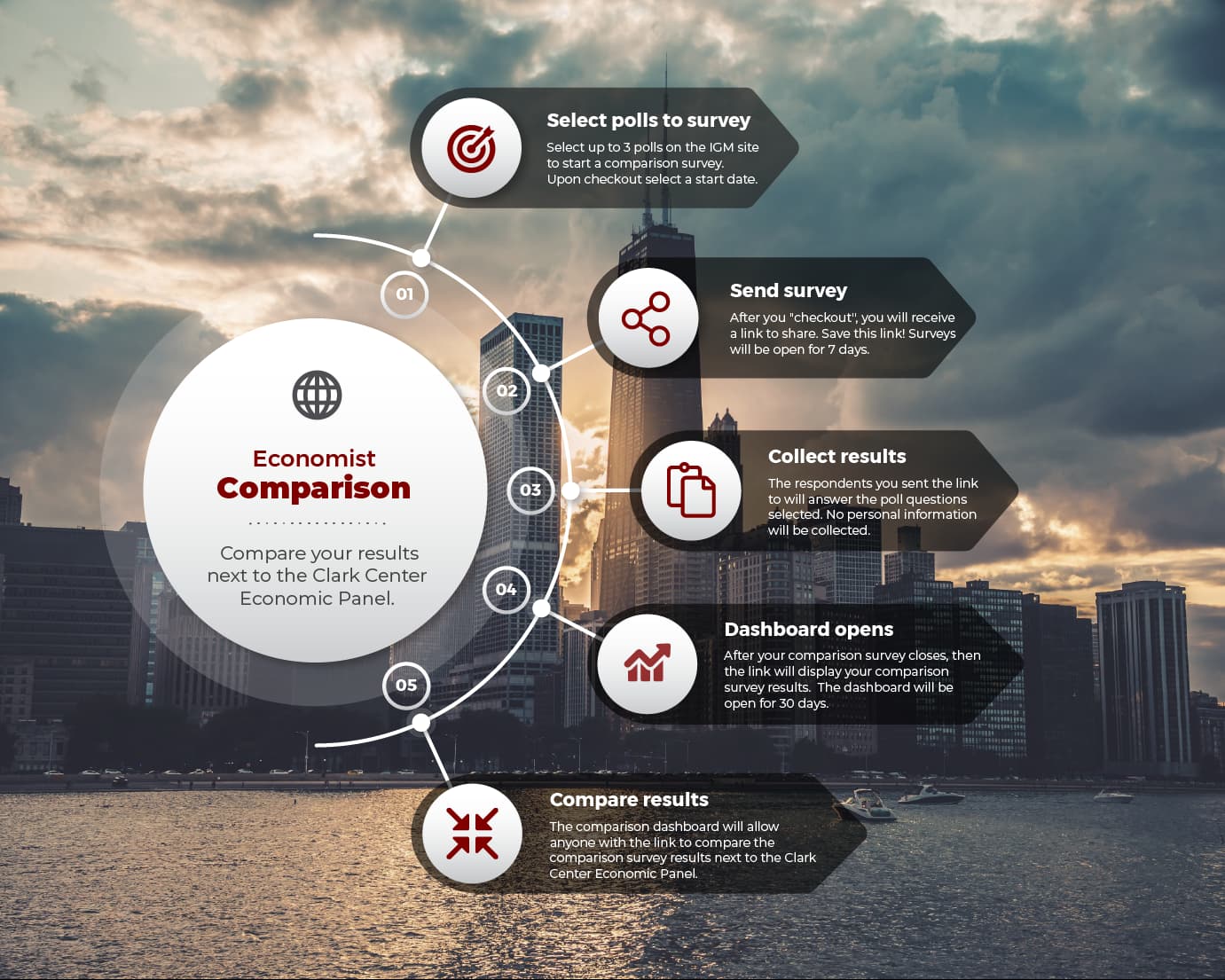
Compare yourself or your peers to the Clark Center Economics Experts Panel