Will Europe Flunk Stress Tests?
Free Trade
Question A:
Question B:
Freer trade improves productive efficiency and offers consumers better choices, and in the long run these gains are much larger than any effects on employment.
Responses
On average, citizens of the U.S. have been better off with the North American Free Trade Agreement than they would have been if the trade rules for the U.S., Canada and Mexico prior to NAFTA had remained in place.
Responses
Bank Bailouts
This week’s IGM Economic Experts Panel poll statement:
Because the U.S. Treasury bailed out and backstopped banks (by injecting equity into them in late 2008, and later committing to provide public capital to any banks that failed the stress tests and could not raise private capital), the U.S. unemployment rate was lower at the end of 2010 than it would have been without these measures.
Because the U.S. Treasury bailed out and backstopped banks (by injecting equity into them in late 2008, and later committing to provide public capital to any banks that failed the stress tests and could not raise private capital), the U.S. unemployment rate was lower at the end of 2010 than it would have been without these measures.
Health-Care Licensing
This week’s IGM Economic Experts Panel poll statement:
Loosening current licensing restrictions on the range of services that nurses, physician assistants, dental hygienists and pharmacists are permitted to perform would help patients on balance, because the additional safety risks would be small compared to the decreased costs in waiting time and fees.
Loosening current licensing restrictions on the range of services that nurses, physician assistants, dental hygienists and pharmacists are permitted to perform would help patients on balance, because the additional safety risks would be small compared to the decreased costs in waiting time and fees.
Short Selling
This week’s IGM Economic Experts Panel poll statement:
Bans on the short selling of financial securities, such as stocks and government bonds, lead to prices that are further, on average, from their fundamental values.
Bans on the short selling of financial securities, such as stocks and government bonds, lead to prices that are further, on average, from their fundamental values.
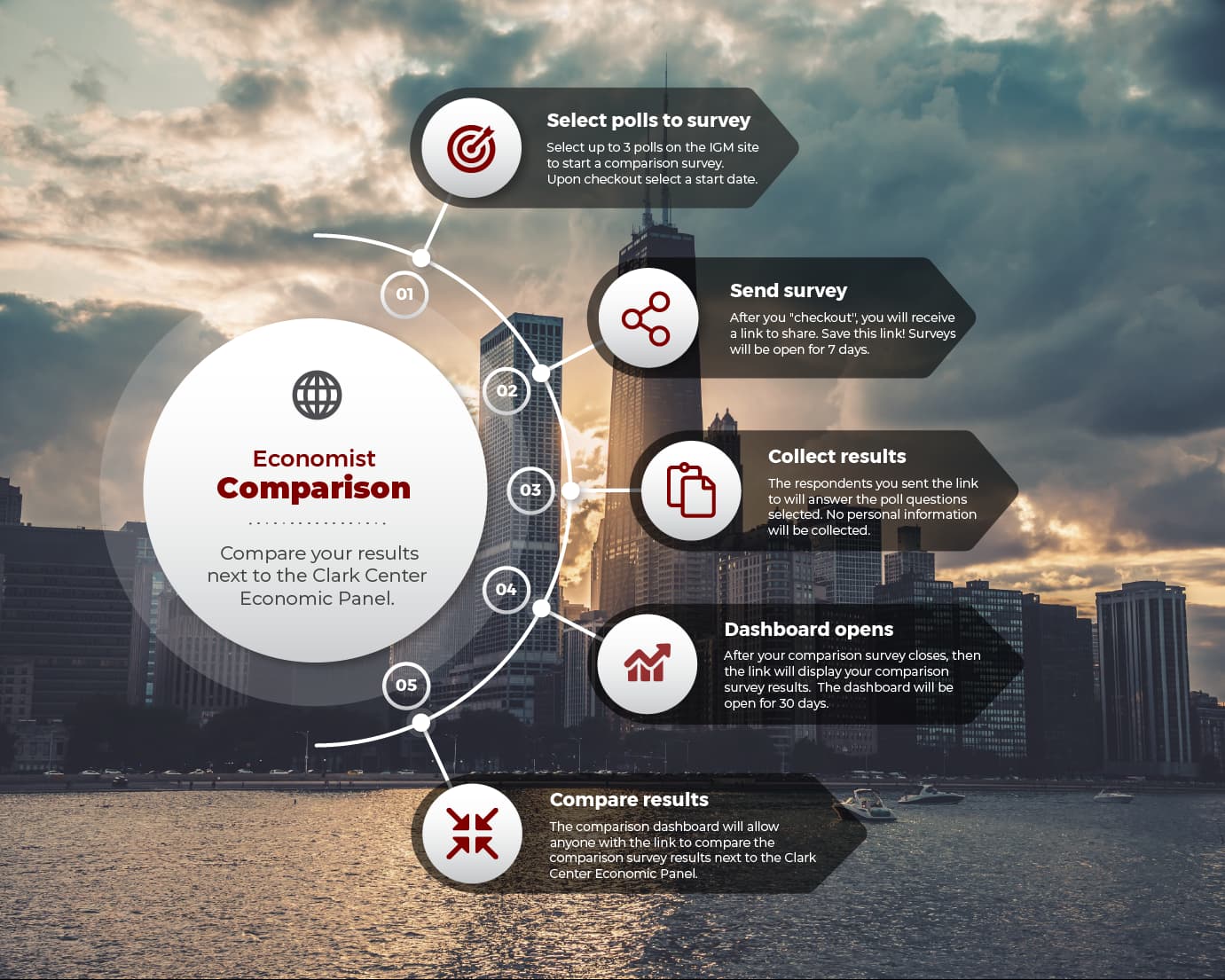
Compare yourself or your peers to the Clark Center Economics Experts Panel