This US survey examines (a) Use of artificial intelligence over the next ten years will lead to a substantial increase in the unemployment rates in advanced countries; (b) Use of artificial intelligence over the next ten years will have a negative impact on the earnings potential of substantial numbers of high-skilled workers in advanced countries; (c) Use of artificial intelligence over the next ten years will lead to substantially greater uncertainty about the likely returns to investment in education
By Topic
This week's IGM Economic Experts Panel statements:
A) The admission of children of alumni and donors at elite private colleges and universities crowds out applicants with greater academic potential.
B) The net effect of admitting children of alumni and donors (including any impact on donations and any losses of other high potential applicants) is likely to be a reduction in the contribution of colleges and universities to society.
This week’s IGM Economic Experts Panel statement:
If the NCAA let colleges pay athletes with more than scholarships (which currently may cover tuition, books, room and board), then top colleges in men’s basketball and football would pay most athletes substantial sums beyond full scholarships.
This week's IGM Economic Experts Panel statement:
An important reason why private college and university tuition has risen faster than the CPI during the past few decades is because competition for faculty members — whose potential earnings in other sectors have steadily improved — has driven up their pay faster than their productivity.
This US survey examines (a) Given that much of the Department of Education's budget is allocated to postsecondary education (including Pell grants and student loans), closing the department would have no measurable effect on the average K to 12th grade school student
Link: https://www.kentclarkcenter.org/wp-content/uploads/2024/11/USDeptOfEducation_2024_Appropriations.pdf
This week’s IGM Economic Experts Panel statement:
Using government funds to guarantee preschool education for four-year olds would yield a much lower social return than the ones achieved by the most highly touted targeted preschool initiatives.
This week’s IGM Economic Experts Panel poll statement:
Public school students would receive a higher quality education if they all had the option of taking the government money (local, state, federal) currently being spent on their own education and turning that money into vouchers that they could use towards covering the costs of any private school or public school of their choice (e.g. charter schools).
This week’s IGM Economic Experts Panel statements:
A) With the economy in lockdown, low-income workers who are above the poverty line will suffer a relatively bigger hit to their incomes than those further up the distribution (even accounting for all government support schemes).
B) With the economy in lockdown, existing gaps in access to quality education between high- and low-income households will be exacerbated.
C) The mortality impact of Covid-19 is likely to fall disproportionately on disadvantaged socio-economic groups.
This week’s IGM European Economic Experts Panel statements:
A) Even with the support policies implemented by European governments in response to the crisis, low-income workers will suffer a relatively bigger hit to their incomes than those further up the distribution.
B) With schools across Europe closed in the lockdown, existing gaps in access to quality education between high- and low-income households will be exacerbated.
C) Combating the effects of the pandemic on inequality should be a priority for policy interventions.
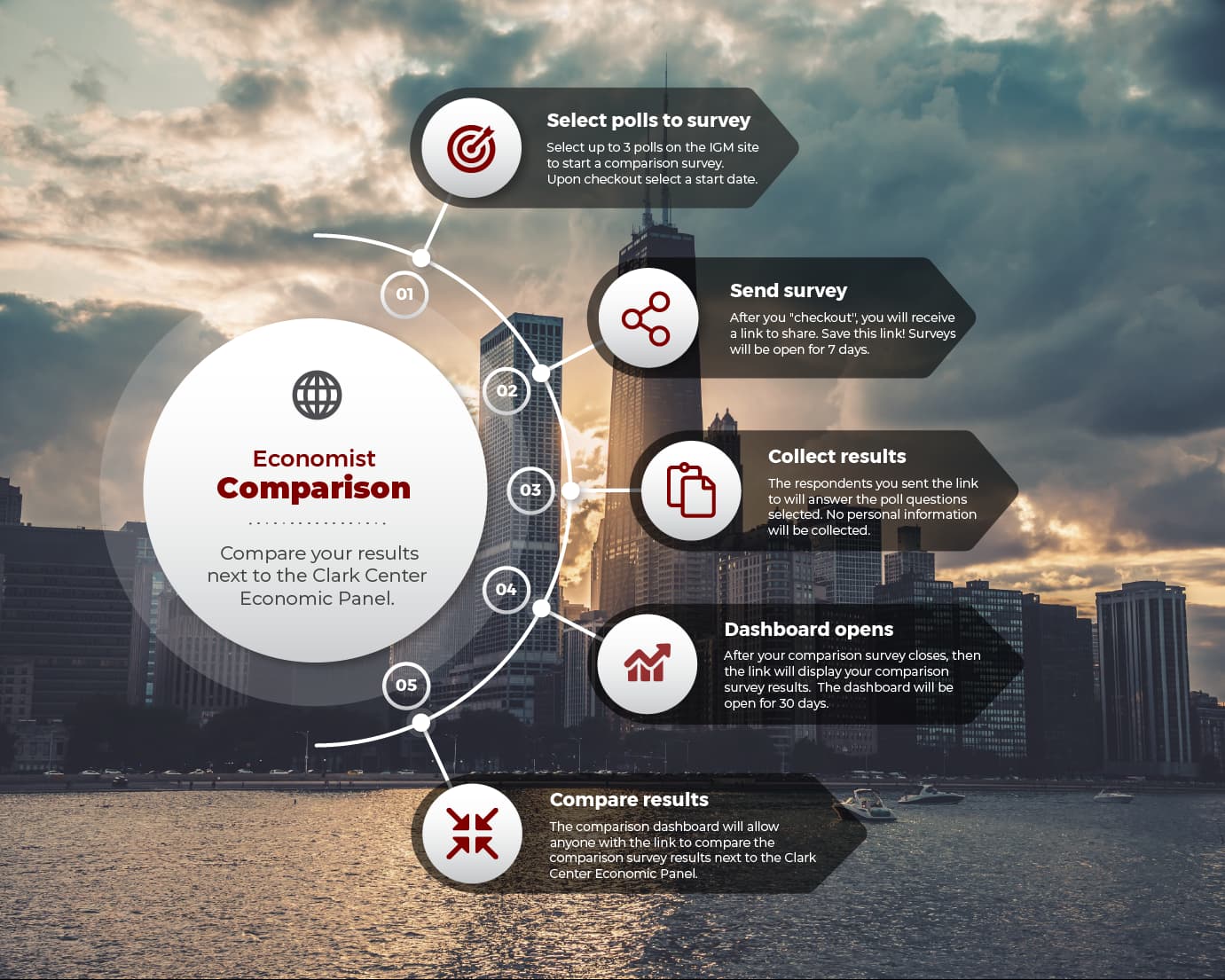
Compare yourself or your peers to the Clark Center Economics Experts Panel