This week’s IGM Economic Experts Panel poll statement:
There are no consequential distortions created by the tax preference that favors obtaining health insurance through employers.
Healthcare
This week’s IGM Economic Experts Panel poll statement:
Federal mandates that government purchases should be “buy American” unless there are exceptional circumstances, such as in the American Recovery and Reinvestment Act of 2009, have a significant positive impact on U.S. manufacturing employment.
This week’s IGM Economic Experts Panel poll statements:
A) Eliminating tax deductions for non-investment personal interest expenses (e.g., on mortgages), with reductions in personal tax rates that are both budget neutral and keep the burden of taxes by income group the same, would lead to more efficient financing decisions by individuals.
B) Reducing the deductibility of interest expenses for non-financial businesses to equalize the overall tax cost of debt and equity financing, while using the extra revenue to reduce personal and corporate tax rates in a budget neutral fashion that also keeps the burden of taxes the same, would lead to more efficient financing decisions by firms.
This week’s IGM Economic Experts Panel poll statement:
Unless they have inside information, very few investors, if any, can consistently make accurate predictions about whether the price of an individual stock will rise or fall on a given day.
Plausible expectations of future dividends, discounted using a plausible risk-adjusted interest rate, explain well the level of stock prices for recently listed internet businesses in 1999.
This week’s IGM Economic Experts Panel poll statement:
The Chinese government pursues policies that keep the renminbi's exchange rate vis à vis the dollar lower than it would be if the currency floated without those policies.
This week’s IGM Economic Experts Panel poll statement:
Public school students would receive a higher quality education if they all had the option of taking the government money (local, state, federal) currently being spent on their own education and turning that money into vouchers that they could use towards covering the costs of any private school or public school of their choice (e.g. charter schools).
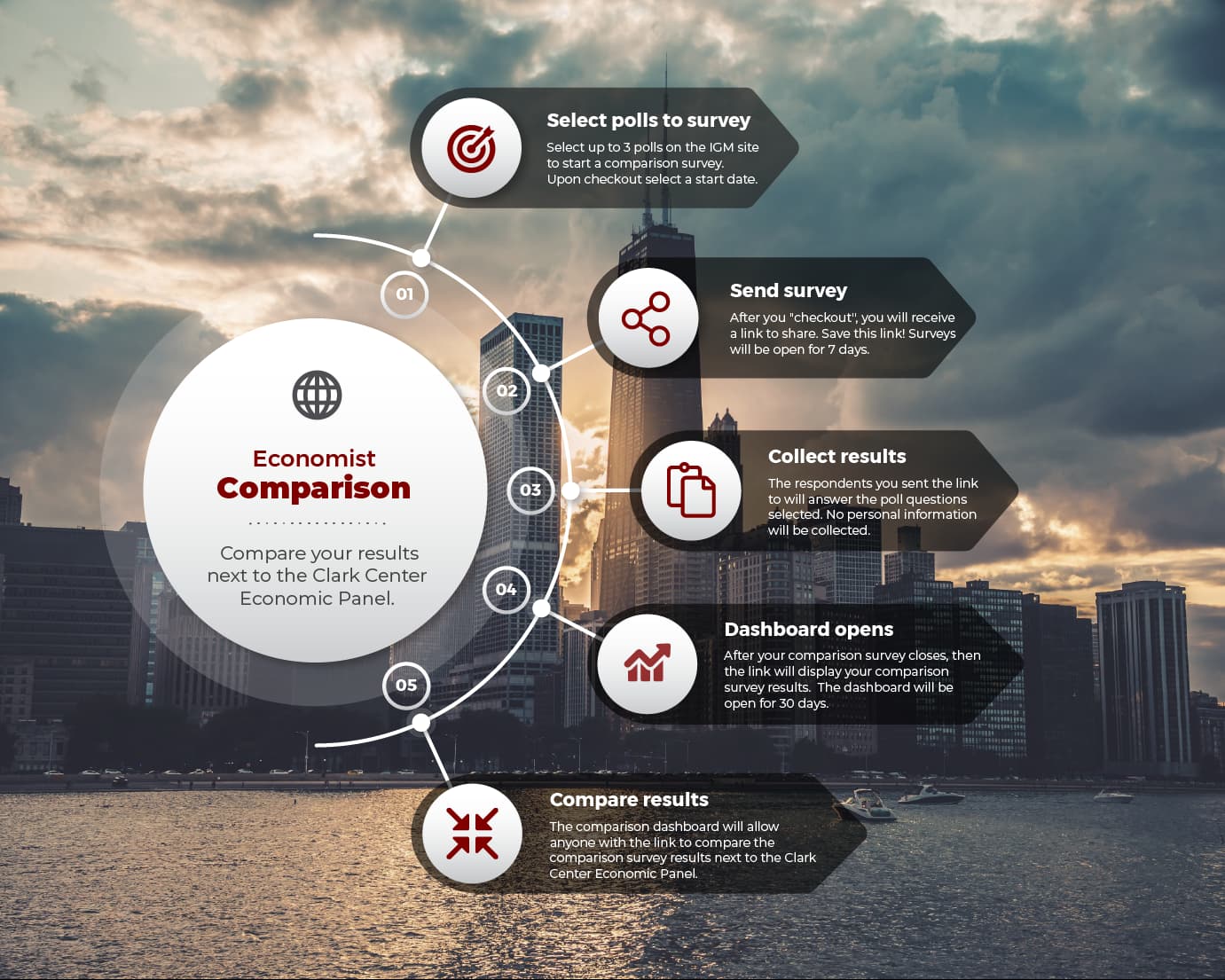
Compare yourself or your peers to the Clark Center Economics Experts Panel