This week’s IGM Economic Experts Panel poll statement:
One of the leading reasons for rising U.S. income inequality over the past three decades is that technological change has affected workers with some skill sets differently than others.
Inequality and Skills
This week’s IGM Economic Experts Panel poll statements:
A) If the US replaced its discretionary monetary policy regime with a gold standard, defining a "dollar" as a specific number of ounces of gold, the price-stability and employment outcomes would be better for the average American.
B) There are many factors besides US inflation risk that influence the current dollar price of gold.
This week’s IGM Economic Experts Panel poll statement:
In general, using more congestion charges in crowded transportation networks — such as higher tolls during peak travel times in cities, and peak fees for airplane takeoff and landing slots — and using the proceeds to lower other taxes would make citizens on average better off.
This week's IGM Economic Experts Panel poll statement:
A tax on the carbon content of fuels would be a less expensive way to reduce carbon-dioxide emissions than would a collection of policies such as “corporate average fuel economy” requirements for automobiles.
This week’s IGM Economic Experts Panel poll statements:
A) All else equal, making drugs illegal raises street prices for those drugs because suppliers require extra compensation for the risk of incarceration and other punishments.
B) The Netherlands restrictions on “soft drugs” combined with a moderate tax aimed at deterring their consumption would have lower social costs than continuing to prohibit use of those drugs as in the US. (Click here for a summary of the Netherlands restrictions.)
This week’s IGM Economic Experts Panel poll statements:
A) Credible assumptions for inflation, GDP growth and primary budget deficits in Italy imply that either the Debt-to-GDP ratio in Italy would increase sharply if Italian interest rates on 10-year government debt remained at the November 30 level of around 7 percent or Italy would lose access to the bond market.
B) Absent outside help to deal with runs, such as a pledge of fiscal support from Germany or an unlimited commitment by the ECB to buy bonds, there is no spending-and-tax plan Italy can announce that would be credible enough to hold its interest rates low enough to stabilize its Debt-to-GDP ratio.
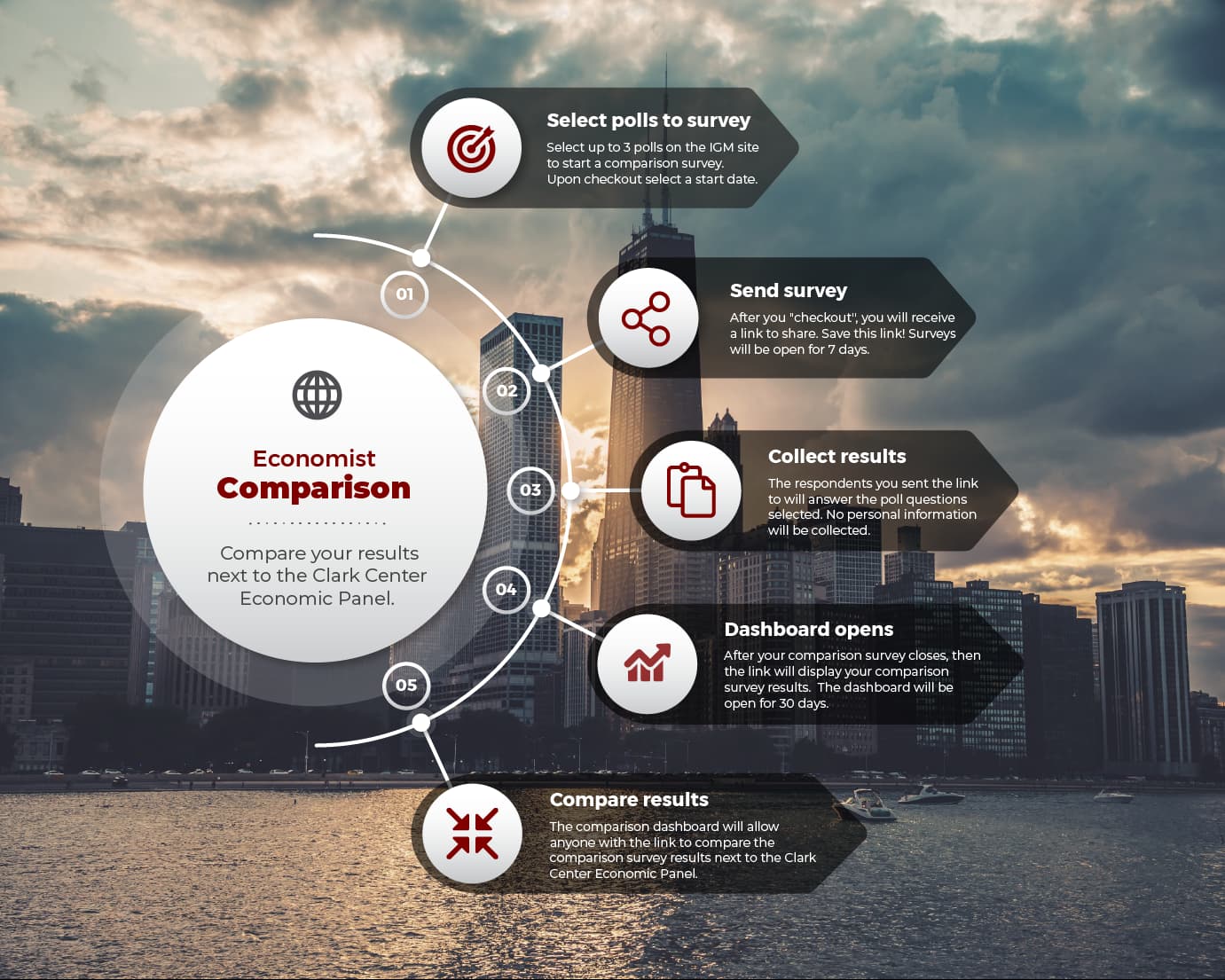
Compare yourself or your peers to the Clark Center Economics Experts Panel