This week’s IGM Economic Experts Panel statements:
A. Even if all the official-sector funding that Greece received from 2010 through August 2012 is written off, propping up Greece to buy time for the rest of Europe to prepare for Greek default has been better for citizens of the Eurozone outside of Greece than a policy that would have cut off funding sooner.
B. A substantial sovereign-debt default by some combination of Greece, Ireland, Italy, Portugal and Spain is a necessary condition for the euro area as a whole to grow at its pre-crisis trend rate over the next three years.
C. Unless there is a substantial default by some combination of Greece, Ireland, Italy, Portugal and Spain on their sovereign debt and commercial bank debt, plus credible reforms to prevent excessive borrowing in the future, the euro area is headed for a costly financial meltdown and a prolonged recession.
European Debt
This week’s IGM Economic Experts Panel statement:
The current trade barriers in the U.S. sugar industry raise the profits of sugar producers and make the typical U.S. consumer pay more for sugar and goods that use sugar as an input.
This week’s IGM Economic Experts Panel statements:
A. Loans to students attending for-profit colleges are especially risky because students attending them have had default rates that greatly exceed those for comparable students attending public and non-profit private institutions.
B. Rules that tie each college's eligibility for federal student loans to its students' graduation rates and post-schooling employment outcomes would better protect taxpayers from losses on student loans.
This week’s IGM Economic Experts Panel statements:
A. The way in which money market funds normally trade – at one dollar per share, even though the per-share value of the assets backing them varies over time – made them vulnerable to a run in 2008 before they received taxpayer guarantees.
B. Taxpayers would be better protected if each money market fund in the U.S. were instead required to trade at its floating net asset value.
C. In the absence of floating net asset values, taxpayers would be better protected if each money market fund in the U.S. were required to set aside capital to protect against losses while holding back a portion of shareholders' cash for a time when they seek to withdraw all of their money.
This week’s IGM Economic Experts Panel statement:
Taxes or bans on large bottles of soft drinks containing sugar are not likely to have a significant effect on obesity rates because people will substitute towards consuming excessive calories in other ways.
This week’s IGM Economic Experts Panel statement:
Subjecting online sales from out-of-state vendors to the same retail sales taxes imposed on in-state sales would raise more tax revenue in the states making this change while reducing the pro-online bias of current policy.
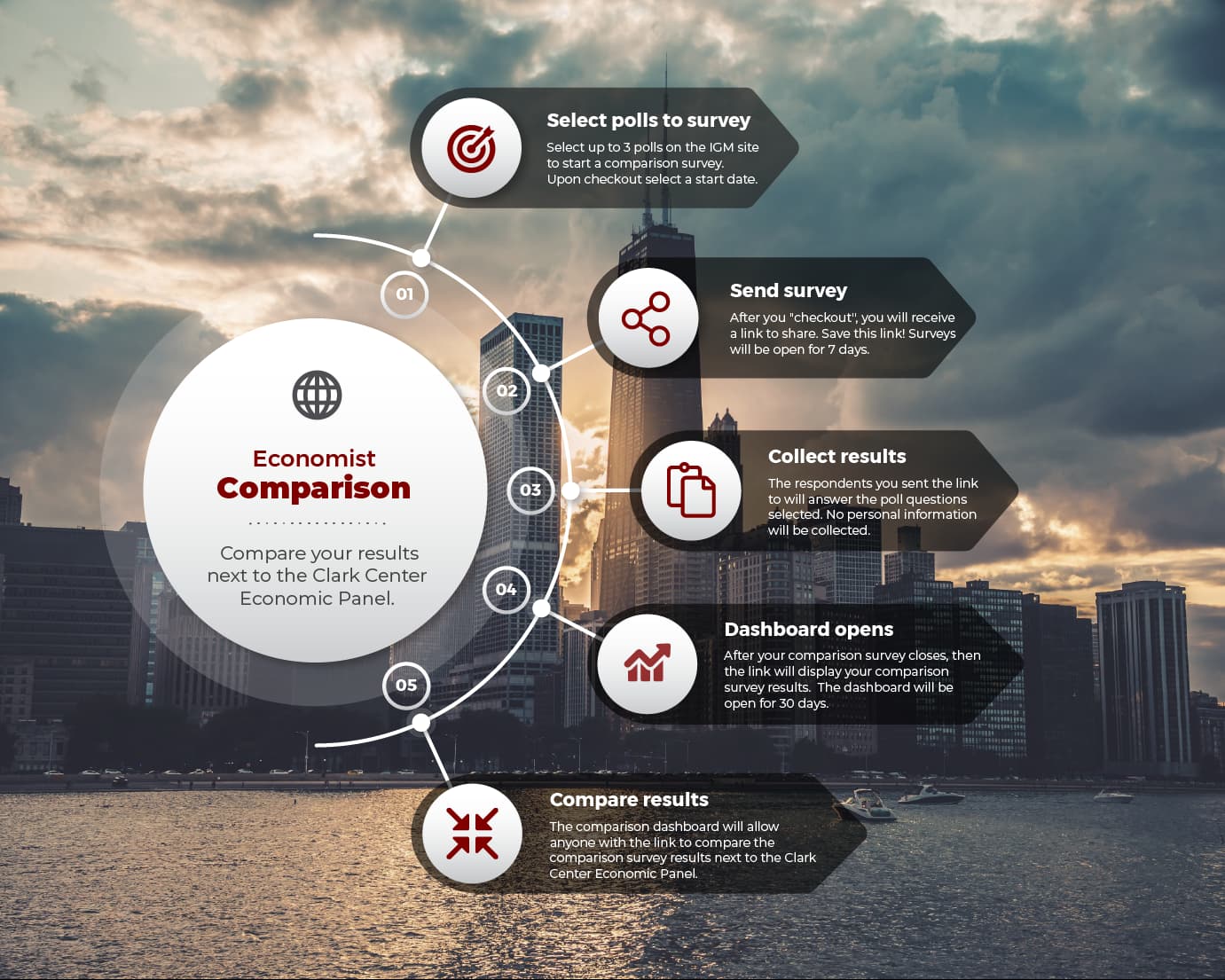
Compare yourself or your peers to the Clark Center Economics Experts Panel