This week’s IGM Economic Experts Panel statements:
A: Consider one of two proposals for restraining future Medicare spending, each by the same amount: The method that President Obama enacted in the Affordable Care Act — reducing Medicare-related payments to private insurers and altering the payment system for doctors and hospitals — imposes risks on future Medicare patients because over time the supply of doctors, hospitals and insurers willing to offer them health services may decline in response to restrained payments.
B: Consider the other of two proposals for restraining future Medicare spending, each by the same amount: The method that Governor Romney advocates — giving future seniors a fixed payment for premiums and letting private insurers compete with Medicare — imposes risks on future Medicare patients because competition may not be powerful to enough to offer future seniors the same quality of care that is currently promised without supplementing their premium support.
Medicare
This week’s IGM Economic Experts Panel statement:
Claims by incumbent presidents and challengers about how many private-sector jobs can be created in a four-year period by sector-level or other targeted policies should be viewed as rough guesses, because overall macroeconomic conditions drive aggregate employment in ways that dominate any net effects of polices that focus on specific industries or households.
This week’s IGM Economic Experts Panel statements:
A: One drawback of taxing capital income at a lower rate than labor income is that it gives people incentives to relabel income that policymakers find hard to categorize as "capital" rather than labor".
B: Despite relabeling concerns, taxing capital income at a permanently lower rate than labor income would result in higher average long-term prosperity, relative to an alternative that generated the same amount of tax revenue by permanently taxing capital and labor income at equal rates instead.
C: Although they do not always agree about the precise likely effects of different tax policies, another reason why economists often give disparate advice on tax policy is because they hold differing views about choices between raising average prosperity and redistributing income.
This week’s IGM Economic Experts Panel statements:
A: By discounting pension liabilities at high interest rates under government accounting standards, many U.S. state and local governments understate their pension liabilities and the costs of providing pensions to public-sector workers.
B: During the next two decades some U.S. states, unless they substantially increase taxes, cut spending, and/or change public-sector pensions, will require a combination of severe austerity budgets, a federal bailout, and/or default.
This week's IGM Economic Experts Panel statements:
A: Even if the third round of quantitative easing that the Fed recently announced increases real GDP growth over the next two years, the increase will be inconsequential.
B: Even if the third round of quantitative easing that the Fed recently announced increases annual consumer price inflation over the next five years, the increase will be inconsequential.
C: Even if inflationary pressures rise substantially as a result of quantitative easing and low interest rates, the Federal Reserve has ample tools to rein inflation back in if it chooses to do so.
This week’s IGM Economic Experts Panel statements:
A: Ethanol content requirements and protectionism against imported ethanol (which includes fuel from sugarcane) raise food prices without significantly reducing carbon-dioxide emissions.
B: A direct disincentive to emit carbon-dioxide, for example through a carbon tax or an emissions permit market, is more efficient than requiring the use of corn-based ethanol fuels.
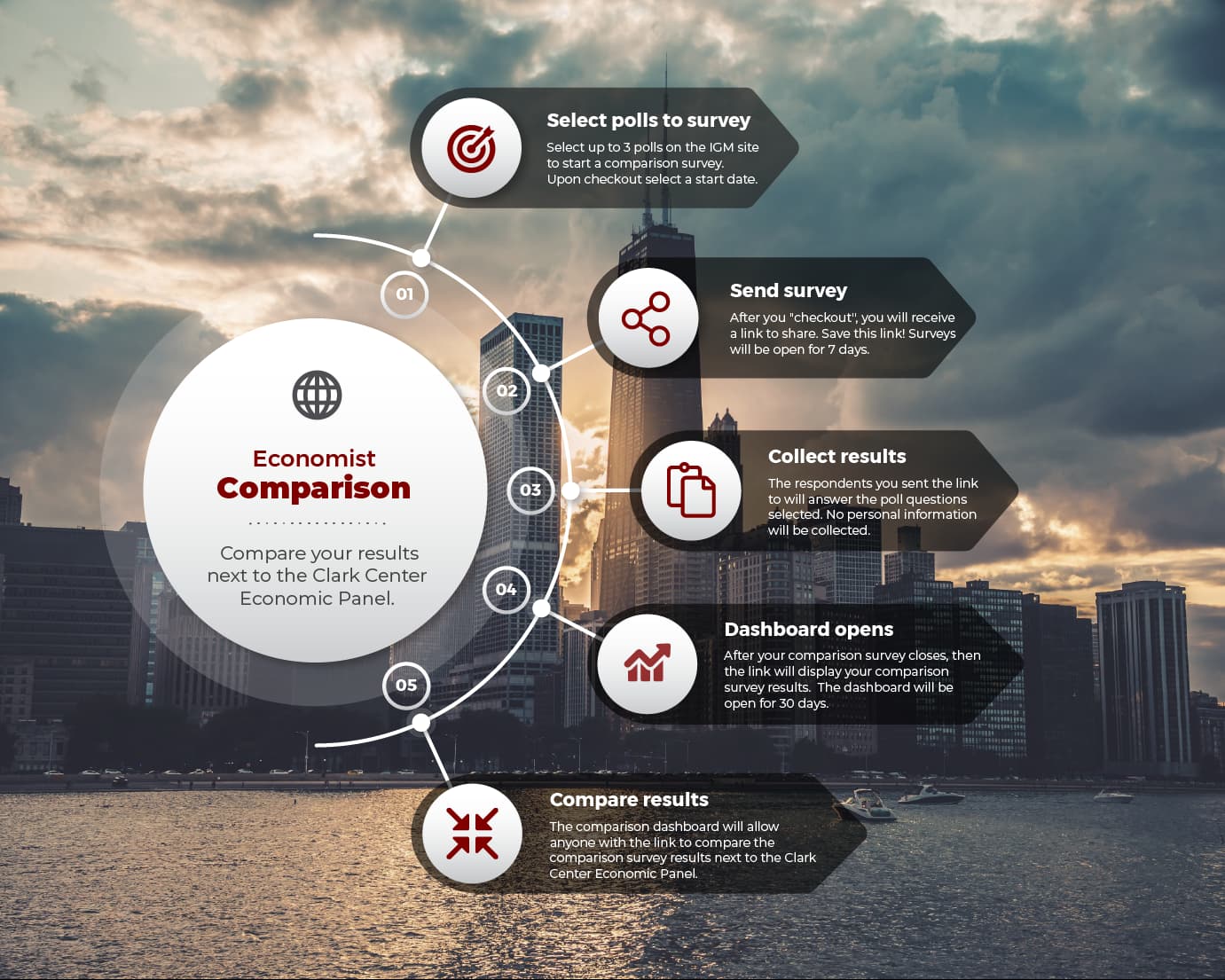
Compare yourself or your peers to the Clark Center Economics Experts Panel