This week's US Economic Experts Panel statements:
A) The $300 supplement to weekly unemployment benefits available from now through September 6 constitutes a major disincentive to work for lower-wage workers.
B) The $300 supplement to weekly unemployment benefits available from now through September 6 is likely to lead to re-employment wages for currently unemployed workers that are higher by an economically meaningful amount.
Unemployment Benefits
This week's European Economic Expert Panel statements:
A) Reliable Covid-19 vaccines will reach developing countries more quickly if the rich countries pay the pharmaceutical companies at prevailing prices to manufacture and distribute the vaccines (or to license production and support licensees), rather than waiving patent protection.
B) The benefits to the US, Canada, Europe, Japan and other rich countries of paying for 12 billion doses of Covid vaccines at prevailing prices and providing them for free to the rest of the world exceed the costs that the rich countries would incur.
This week's US Economic Experts Panel statements:
A) Reliable Covid-19 vaccines will reach developing countries more quickly if the rich countries pay the pharmaceutical companies at prevailing prices to manufacture and distribute the vaccines (or to license production and support licensees), rather than waiving patent protection.
B) The benefits to the US, Canada, Europe, Japan and other rich countries of paying for 12 billion doses of Covid vaccines at prevailing prices and providing them for free to the rest of the world exceed the costs that the rich countries would incur.
This week's European Economic Experts Panel statements:
The Bank for International Settlements defines a central bank digital currency as follows: ‘In simple terms, a central bank digital currency (CBDC) would be a digital banknote. It could be used by individuals to pay businesses, shops or each other (a 'retail CBDC'), or between financial institutions to settle trades in financial markets (a ‘wholesale CBDC').’
A) For developed countries, a central bank digital currency that is available to the public at large would offer social benefits that exceed the associated costs or risks.
B) Central banks that do not introduce their own digital money risk losing the ability to conduct effective monetary policy.
C) The introduction of a central bank digital currency is unlikely to have major effects on the economy.
This week's US Economic Experts Panel statements:
A) In an economy open to capital flows, monetary policy can only be effective with a floating exchange rate.
B) For emerging and developing economies open to the world capital market, a flexible exchange rate confers little advantage over a pegged exchange rate in terms of economic stability.
C) The key feature making the US a more natural optimum currency area than the euro area is higher labor mobility.
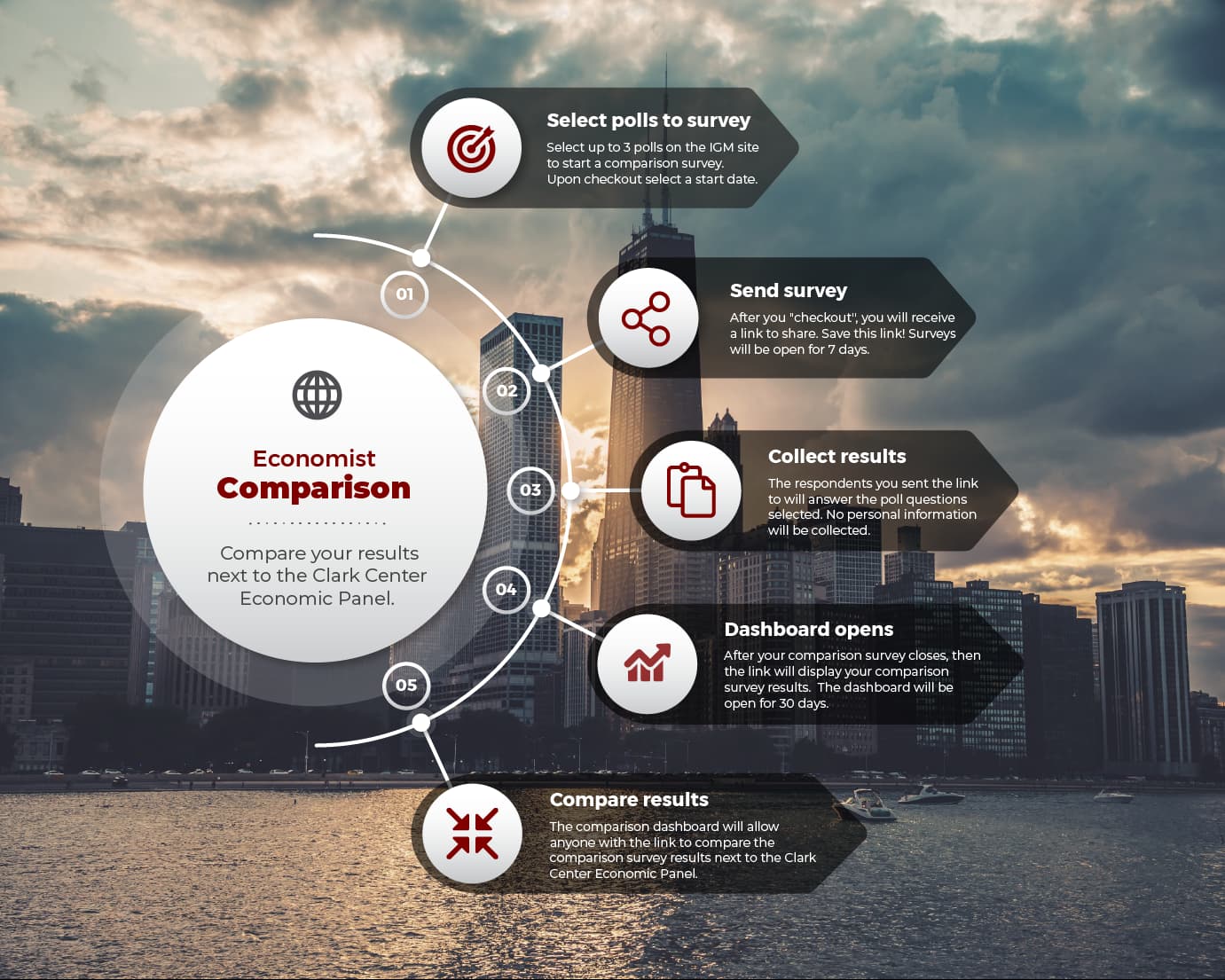
Compare yourself or your peers to the Clark Center Economics Experts Panel