This week’s IGM Economic Experts Panel statement:
Although there are many issues for Scotland’s voters to consider, one consequence of separating from the rest of the UK would be greater macroeconomic instability for Scotland for many years.
Scottish Independence
This week’s IGM Economic Experts Panel statements:
A: Because the US has underspent on new projects, maintenance, or both, the federal government has an opportunity to increase average incomes by spending more on roads, railways, bridges and airports. (The experts panel previously voted on this question on May 23, 2013. Those earlier results can be found here.)
B: Past experience of public spending and political economy suggests that if the government spent more on roads, railways, bridges and airports, many of the projects would have low or negative returns. (The experts panel previously voted on this question on May 23, 2013. Those earlier results can be found here.)
This week’s IGM Economic Experts Panel statements:
A: By discounting pension liabilities at high interest rates under government accounting standards, many U.S. state and local governments understate their pension liabilities and the costs of providing pensions to public-sector workers. (The experts panel previously voted on this question on October 1, 2012. Those earlier results can be found here.)
B: During the next two decades some U.S. states, unless they substantially increase taxes, cut spending, and/or change public-sector pensions, will require a combination of severe austerity budgets, a federal bailout, and/or default. (The experts panel previously voted on this question on October 1, 2012. Those earlier results can be found here.)
This week’s IGM Economic Experts Panel statement:
New technology for fracking natural gas, by lowering energy costs in the United States, will make US industrial firms more cost competitive and thus significantly stimulate the growth of US merchandise exports. (The experts panel previously voted on this question on May 23, 2012. Those earlier results can be found here.)
This week’s IGM Economic Experts Panel statements:
A: Because of the American Recovery and Reinvestment Act of 2009, the U.S. unemployment rate was lower at the end of 2010 than it would have been without the stimulus bill. (The experts panel previously voted on this question on February 15, 2012. Those earlier results can be found here.)
B: Taking into account all of the ARRA’s economic consequences — including the economic costs of raising taxes to pay for the spending, its effects on future spending, and any other likely future effects — the benefits of the stimulus will end up exceeding its costs.
This week’s IGM Economic Experts Panel statement:
Legislation introduced in Congress would require the Federal Reserve to "submit to the appropriate congressional committees…a Directive Policy Rule", which shall "describe the strategy or rule of the Federal Open Market Committee for the systematic quantitative adjustment of the Policy Instrument Target to respond to a change in the Intermediate Policy Inputs." Should the Fed deviate from the rule, the Fed Chair would have to "testify before the appropriate congressional committees as to why the [rule]…is not in compliance." Enacting this provision would improve monetary policy outcomes in the U.S.
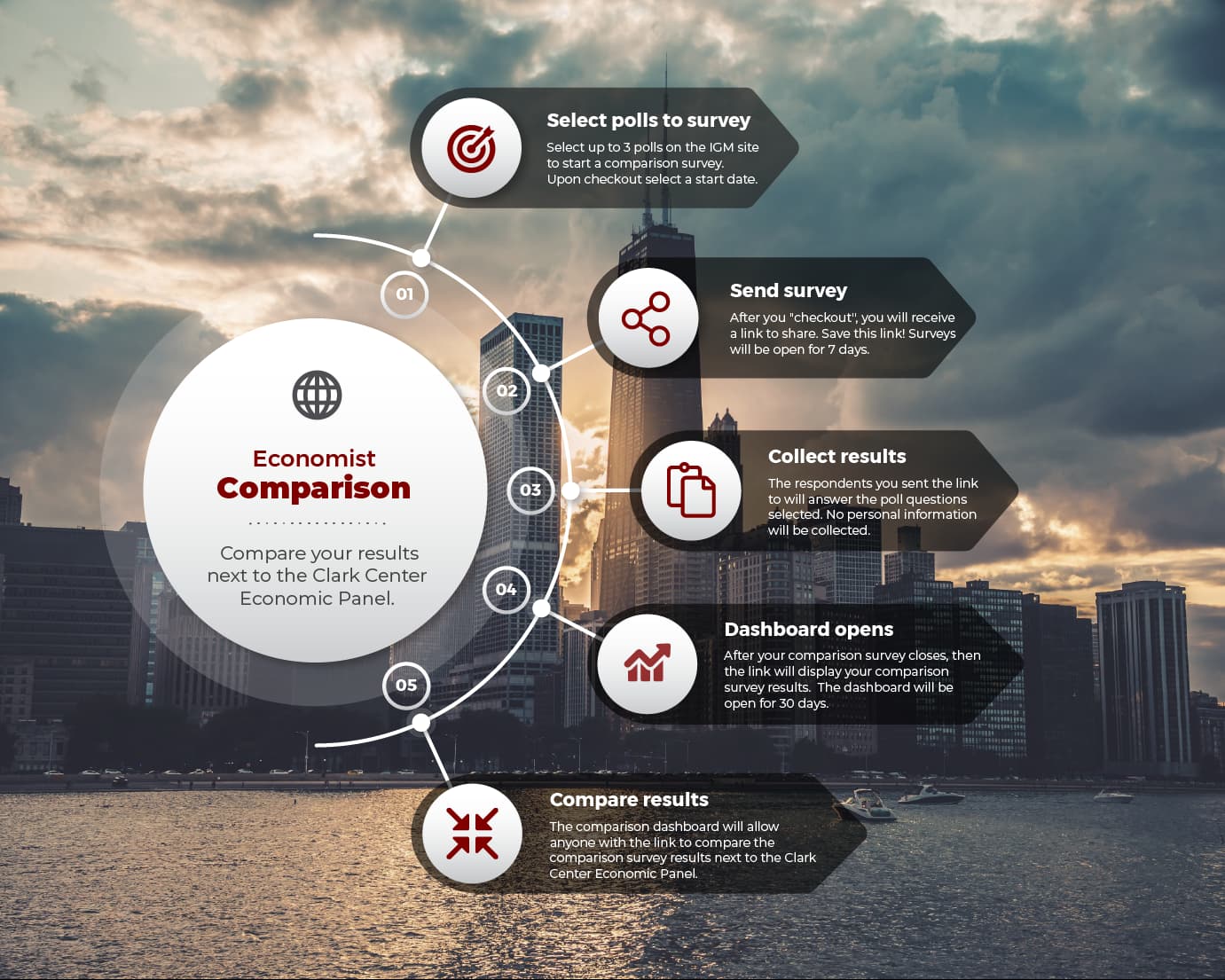
Compare yourself or your peers to the Clark Center Economics Experts Panel