This US survey examines (a) Without extension of the expanded public subsidies for Affordable Care Act healthcare plans, there would be a substantial rise in the number of Americans without health insurance; (b) Losses in the health and well-being of Americans who could no longer afford health insurance in the absence of the subsidies would exceed the savings from the expiration; (c) The possible need for subsidies substantially in excess of those initially provided by the ACA indicates that other changes in the healthcare system are needed to enable broad-based access
By Topic
This week’s IGM Economic Experts Panel statement:
Giving specific presents as holiday gifts is inefficient, because recipients could satisfy their preferences much better with cash.
This week's IGM Economic Experts Panel statement:
Because labor markets across different sectors are connected, rising productivity in manufacturing leads the cost of labor-intensive services — such as education and health care — to rise.
This week's IGM European Economic Experts Panel statement:
Insights from psychology about individual behavior – examples of which include limited rationality, low self-control, or a taste for fairness – predict several important types of observed market outcomes that fully-rational economic models do not.
This week's IGM Economic Experts Panel Statement:
Insights from psychology about individual behavior – examples of which include limited rationality, low self-control, or a taste for fairness – predict several important types of observed market outcomes that fully-rational economic models do not.
This week’s IGM Economic Experts Panel statement:
Consumers would not necessarily be better off if cable and satellite TV firms were required to offer a la carte pricing for individual channels, because the networks' programming charges and the satellite-and-cable fees could adjust in response to this rule.
This week's IGM Economic Experts Panel statement:
The “Cadillac tax” on expensive employer-provided health insurance plans will reduce costly distortions in US health care if it is allowed to take effect as scheduled in 2018.
This week’s IGM Economic Experts Panel statement:
Reducing the income-tax deductibility of charitable gifts is a less distortionary way to raise new revenue than raising the same amount of revenue through a proportional increase in all marginal tax rates.
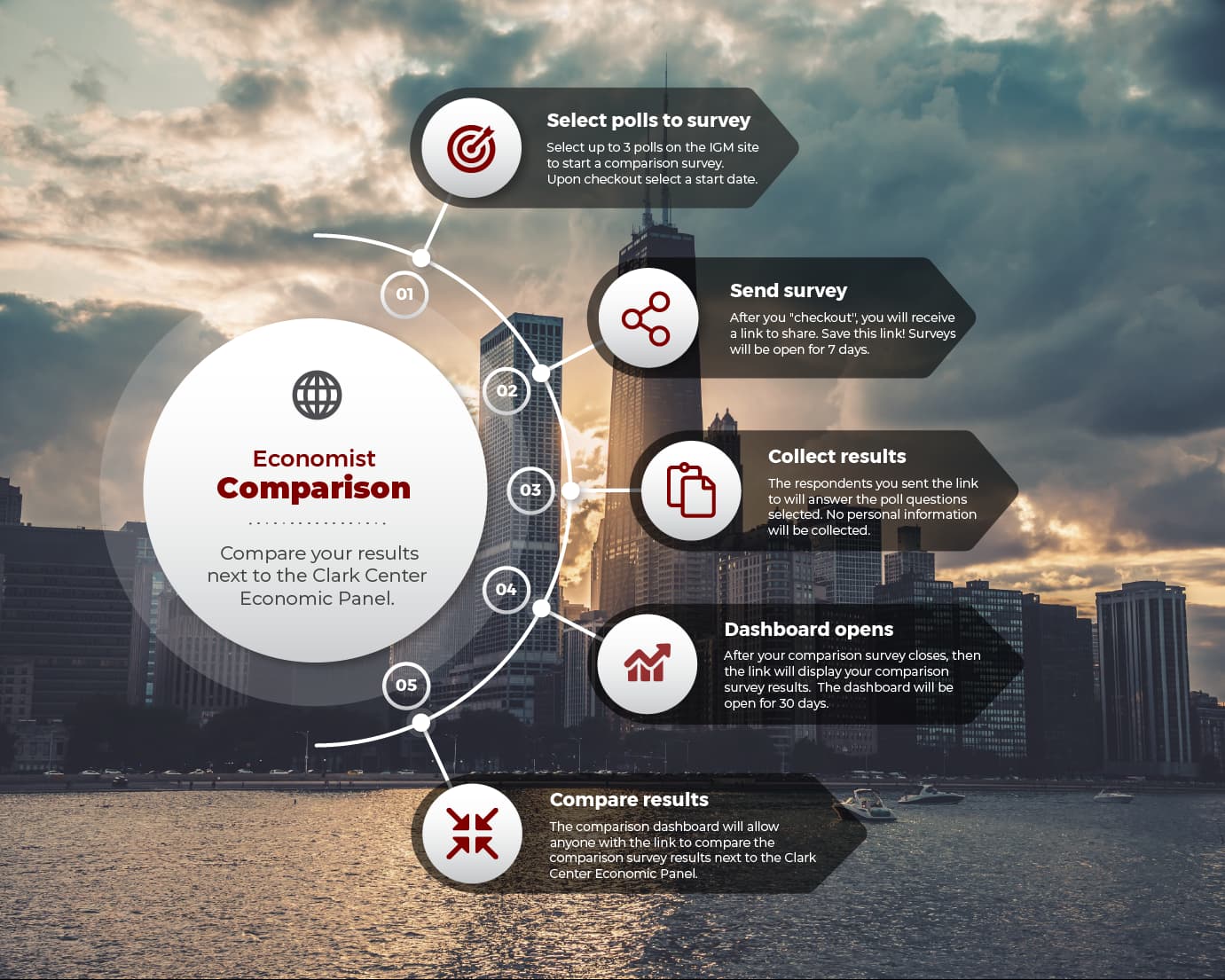
Compare yourself or your peers to the Clark Center Economics Experts Panel